
Answer
Homeowners considering updating their property with fresh paint typically see the best results when scheduling projects during specific periods of warmer, drier weather. The ideal time for applying exterior paint in Edmonton generally spans from late spring through early fall, specifically May to September, due to consistent temperatures and lower humidity. Phoenix Finishing Touch Painting focuses on precise application techniques during these months, ensuring proper curing and lasting adhesion for every project.
Overview
This article details factors affecting how paint performs and guides scheduling for optimal results. It examines seasonal impacts, necessary preparation, and elements influencing durability. Later sections also help homeowners select appropriate coatings for their properties.
The article includes a labeled real-world hypothetical from Alex, a homeowner, about selecting the right time for home exterior upgrades. This scenario helps illustrate key decision points homeowners consider for a painting project.
- Choosing Season: Factors like temperature and humidity play a significant role in successful exterior painting projects.
- Home Prep: Proper surface cleaning and repairs are necessary before applying new paint layers.
- Durability Factors: Weather and material choices affect how long coatings last on an Edmonton exterior.
- Scheduling Work: Timing paint application with favorable weather conditions helps ensure a quality finish.
- Finding Paint: Selecting paint type depends on climate, surface, and desired aesthetic outcome.
- Real-World Example: Alex needed to coordinate painting services with seasonal weather for optimal results.
Edmonton Exterior Paint: Choosing the Right Season
The climate directly impacts how long paint lasts and how well it adheres to surfaces. In Edmonton, ideal conditions for applying exterior paint typically occur from late spring to early fall, specifically May through September. During these months, temperatures are consistently warm, and humidity levels are lower, allowing paint to dry and cure properly.
Phoenix Finishing Touch Painting recommends planning projects during these periods to ensure the best outcome for your home’s exterior paint finish. Proper application conditions reduce the risk of issues like bubbling, peeling, or uneven drying, which can shorten the lifespan of your paint job. Our experience shows that good weather significantly affects the final quality and durability, ensuring that your investment stands up to the elements. For more information on preparing for a paint job, homeowners can review painting prep steps.
| Season | Conditions | Impact on Paint |
|---|---|---|
| Spring (Late May-June) | Mild temperatures, moderate humidity. | Good for initial coats; allows sufficient drying time before hotter summer days. |
| Summer (July-August) | Warmest temperatures, low humidity. | Optimal for quick drying and curing, minimizing moisture-related issues. |
| Fall (Early September) | Cooler temperatures, reduced daylight hours. | Suitable if temperatures remain above minimum curing thresholds; careful timing is important. |
Choosing the right time protects your investment and ensures a lasting finish for your exterior paint. Phoenix Finishing Touch Painting helps homeowners select the best schedule, offering services to ensure quality results. You can view examples of our completed work in our exterior gallery.
Preparing Your Edmonton Home for Exterior Paint
Proper preparation before applying any exterior paint makes a significant difference in how long the finish lasts and how good it looks. Surface cleaning, repairs, and priming are all steps that contribute to adhesion and durability. Phoenix Finishing Touch Painting emphasizes these initial stages to secure a high-quality outcome.
Skipping essential steps can lead to peeling, cracking, or premature fading, especially with the weather conditions here. Investing time upfront saves money and effort later by extending the life of your paint job. Our experience shows a properly prepped surface accepts paint better, resulting in a more uniform appearance.
- Clean Surfaces Thoroughly: Wash all exterior surfaces to remove dirt, mildew, and loose debris. A pressure washer can speed up this process, but a scrub brush and cleaning solution work well for smaller areas.
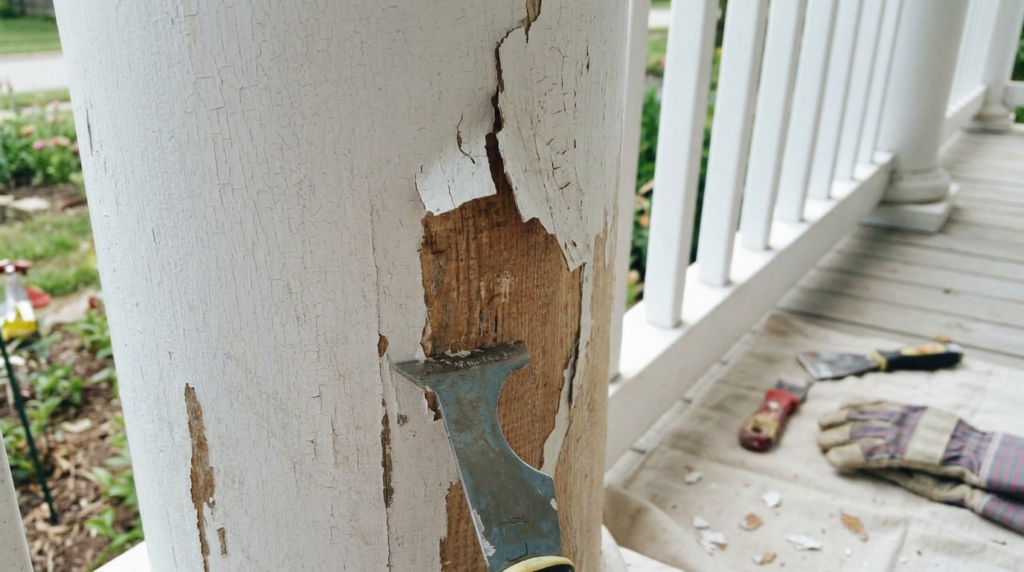
- Scrape Loose Paint: Remove any old, flaking paint with a scraper or wire brush. Feather the edges of existing paint for a smoother transition.
- Repair Damage: Fill any cracks, holes, or imperfections in siding or trim with appropriate exterior fillers. Allow these repairs to dry completely and then sand them smooth.
- Sand Glossy Surfaces: Lightly sand any glossy areas to create a profile that the new paint can grip onto. This step is important for proper adhesion.
- Prime Bare Spots: Apply a high-quality exterior primer to any bare wood, metal, or patched areas. Primer helps paint adhere evenly and blocks stains.
- Mask and Cover: Protect windows, doors, light fixtures, and landscaping with painter’s tape and drop cloths. This prevents accidental drips and overspray. Painting Prep Steps can offer more detailed guidance.
Each of these steps directly impacts the longevity of the finish. For example, failing to properly clean or prime can cause even the highest quality coatings to fail prematurely. Homeowners can review further details on specific processes by exploring About our methods and approach to each project.
Exterior Paint Durability Factors in Edmonton’s Climate
Edmonton’s climate, characterized by wide temperature swings, harsh winters, and hot summers, presents unique challenges for exterior coatings. Paint longevity depends significantly on its ability to withstand these conditions without cracking, peeling, or fading. We often see how crucial proper product selection is when dealing with moisture fluctuations and UV exposure, which can quickly degrade subpar materials.
Specific paint formulations are designed to maintain integrity despite freezing temperatures, strong winds, and intense summer sunlight. Homeowners should select coatings engineered for these climatic demands to ensure a lasting finish. When considering exterior paint for a home here, assessing factors like adhesion, flexibility, and UV resistance is key to preventing premature failure.
Homeowners frequently inquire about how long their paint will last. Phoenix Finishing Touch Painting recommends products that offer proven performance against seasonal stresses, supporting the paint’s ability to protect the home for years. We ensure the preparation and application methods align with manufacturers’ specifications for regional weather, which directly impacts the product’s lifespan. An exterior paint that can withstand these conditions saves on future maintenance costs.
| Durability Factor | Impact on Paint Lifespan | Considerations for Edmonton Homes |
|---|---|---|
| Temperature Fluctuations | Causes expansion and contraction, leading to cracking or peeling. | Choose flexible elastomeric or acrylic latex paints. |
| UV Radiation | Fades colors and breaks down binders, causing chalking. | Opt for paints with high-quality pigments and UV inhibitors. |
| Moisture (Rain, Snow, Humidity) | Promotes mildew growth, blistering, and wood rot if not properly sealed. | Select mildew-resistant formulas with excellent adhesion and breathability. For more on how weather affects paint projects, see Edmonton weather woes. |
| Surface Preparation | Poor prep leads to poor adhesion, resulting in early paint failure. | Ensure thorough cleaning, sanding, priming, and patching. |
When to Schedule Exterior Painting in Edmonton
Optimal conditions for applying exterior paint occur when temperatures are consistently above 10°C and below 32°C, coupled with low humidity. This temperature range ensures proper paint adhesion and drying, preventing issues like blistering or cracking. Phoenix Finishing Touch Painting recommends scheduling projects during periods of stable weather to achieve the best results.
Summer provides the longest stretch of ideal weather for outdoor painting tasks. However, spring and fall also offer suitable windows, especially during dry spells. Planning around local weather patterns helps avoid delays and ensures the paint cures correctly for maximum durability. For a complete guide, review our Edmonton Exterior Painting resource.
- Late Spring (May-June): Temperatures begin to stabilize, offering a good balance of warmth without excessive heat.
- Summer (July-August): This period generally provides the most consistent warmth and lowest humidity, which is ideal for quick drying and multiple coats.
- Early Fall (September-October): As temperatures cool, there are still dry days suitable for painting, though daylight hours shorten.
- Avoid Rainy Forecasts: Moisture can compromise paint adhesion and finish, so a clear forecast is necessary for several days following application.
- Low Humidity: High humidity slows drying times and can lead to uneven finishes.
We monitor local forecasts closely to select the best days for exterior paint applications, especially given the unpredictable weather. Our approach minimizes risks associated with temperature fluctuations and sudden rainfall, common challenges here in Edmonton. We confirm that conditions allow for successful paint curing before starting any project.
Finding the Best Exterior Paint for Edmonton Homes
Selecting appropriate paint products requires balancing appearance with environmental factors. The climate in Edmonton challenges exterior paint with wide temperature swings, snow, and rain. We recommend choosing products formulated for weather resistance and flexibility.
Phoenix Finishing Touch Painting often recommends acrylic latex options due to their durability and ability to expand and contract with changing temperatures, reducing cracking and peeling. This resilience is a key consideration for lasting finishes. Homeowners here can review our about us page to learn more about our local experience.
Choosing the right paint for a project depends on factors like the substrate material, existing paint condition, and desired finish. For instance, a home with significant sun exposure may benefit from paint with UV protection. Edmonton Exterior Painting involves selecting products that resist fading and chalking over time.
| Factor | Consideration for Exterior Paint |
|---|---|
| Substrate Type | Different surfaces like wood, stucco, or vinyl require specific primers and paint adhesion properties. |
| Climate Exposure | Areas with intense sun exposure benefit from UV-resistant paint to prevent fading. |
| Desired Finish | Sheen levels, from flat to gloss, affect both appearance and cleaning ease. |
| Durability Needs | High-traffic areas or homes exposed to harsh weather benefit from more resilient formulations. |
Phoenix Finishing Touch Painting Your Edmonton Exterior
Phoenix Finishing Touch Painting offers specialized services for homeowners seeking lasting exterior paint finishes in the Edmonton area. Our approach considers local weather patterns and specific architectural styles to deliver results that withstand seasonal changes. We prioritize thorough surface preparation and use quality products for every project. Edmonton House Painting
We find that many homes here benefit from advanced paint formulations designed for thermal expansion and contraction, which helps prevent premature cracking and peeling. When homeowners consider exterior paint for their property, we recommend reviewing previous projects in our Exterior Gallery to assess the quality and style Phoenix Finishing Touch Painting provides.
| Service Aspect | Benefit for Edmonton Homeowners |
|---|---|
| Climate-Specific Material Selection | Phoenix Finishing Touch Painting selects paint products that endure harsh winters and warm summers, providing a finish that resists chipping and fading. |
| Detailed Surface Preparation | Proper cleaning, scraping, and priming ensures maximum adhesion and a smooth finish, prolonging the lifespan of the exterior paint. |
| Experienced Application Techniques | Our painters use methods that ensure even coverage and appropriate drying times, accounting for local humidity and temperature variations. |
| Local Expertise and Scheduling | We advise on optimal painting seasons to avoid adverse weather, ensuring the paint cures correctly for a durable result. |
FAQ
Considering exterior paint for your Edmonton home? Below, we’ve compiled answers to some common questions about the best season and considerations for your painting project.
| Question | Answer |
|---|---|
| When is the best time to schedule exterior painting in Edmonton? | The ideal window for applying exterior paint in Edmonton is from late spring through early fall, specifically May to September. This period offers consistently warm temperatures and lower humidity. These conditions allow paint to dry and cure properly, reducing the risk of issues like bubbling or peeling. |
| How does Edmonton’s climate affect exterior paint choices? | Edmonton’s climate has significant temperature swings and exposure to snow and rain, which challenges exterior coatings. It is important to select paints designed for weather resistance and flexibility. Acrylic latex paints are often recommended for their durability and ability to expand and contract with temperature changes. |
| What preparation steps are necessary before applying new exterior paint in Edmonton? | Proper preparation involves cleaning all surfaces thoroughly to remove dirt and mildew. Scraping loose paint, repairing any damage like cracks or holes, and sanding glossy areas are also essential. Priming bare spots and masking off surrounding areas prevent issues and ensure good adhesion. |
| Can exterior painting be done in the fall in Edmonton? | Yes, early fall, particularly September, can be suitable for exterior painting in Edmonton. This is possible if temperatures remain above the minimum curing thresholds for the paint. Careful timing is important to ensure the paint has adequate drying time before colder weather arrives. |