
Answer
Selecting the correct paint for a project often depends on the surface and desired finish. Oil paint latex options each offer distinct properties for durability, application, and drying time. Phoenix Finishing Touch Painting often recommends specific paint types based on the substrate and expected wear to ensure a lasting finish.
Overview
Making smart paint choices means knowing the advantages of different types available. This guide looks at the key differences between various paint options, including how they perform, when to use them, and what to expect during application.
The following sections break down specific details to help with paint selection for your project.
- Paint Basics: Compare latex and oil paint for different applications.
- Latex Selection: Identify situations where latex paint excels for home projects.
- Oil Benefits: Explore the distinct advantages of oil-based paints for specific needs.
- Durability Comparison: See how paint types compare in terms of wear and tear.
- Paint Application: Get tips on applying both paint types for best results.
- Painting Advice: Review Phoenix Finishing Touch Painting’s advice for common painting questions.
- Paint Visuals: Learn how different paints look and perform on surfaces.
Latex Paint vs. Oil Paint Basics
The core difference between these two paint types lies in their chemical composition, which directly affects how they perform on various surfaces. Latex paints are water-based, while oil paint latex varieties use natural oils or synthetic resins as their binders. This fundamental distinction influences drying time, durability, and application methods for each type.
Phoenix Finishing Touch Painting observes that the choice between water-based and oil-based coatings often depends on the specific project and desired outcome. For instance, some surfaces respond better to the adhesion properties of oil-based products, while others benefit from the faster drying and easier cleanup of latex. We guide clients through these considerations to achieve a lasting finish, offering paint types comparison to help decide.
| Feature | Latex (Water-Based) Paint | Oil-Based Paint |
|---|---|---|
| Cleanup | Water and soap | Mineral spirits or paint thinner |
| Drying Time | Dries quickly, often within 1-2 hours | Dries slowly, usually 6-8 hours or overnight |
| Flexibility | More flexible; resists cracking and yellowing | Less flexible; prone to cracking over time |
| Durability | Good durability, especially modern formulations | Hard, smooth finish with high scuff resistance |
| Odor | Low odor | Strong odor, requires good ventilation |
| Best For | Walls, ceilings, general interiors, painting prep steps on drywall | Trim, doors, cabinets, high-traffic areas, or surfaces needing a hard finish |
When to Select Latex Paint
Latex paint offers distinct advantages for many residential painting projects due to its water-based formulation. It dries quickly, cleans up easily with water, and maintains color vibrancy over time. For interior walls, ceilings, and surfaces that do not experience heavy impact, latex paints are often the preferred choice.
This paint type works well on various substrates, including drywall, plaster, and wood trim, making it versatile for general home improvements. Phoenix Finishing Touch Painting recommends latex for most interior applications in Edmonton because of its forgiving nature and lower odor compared to solvent-based alternatives. Choosing latex also simplifies future repainting, as new coats typically adhere well without extensive preparation.
When working on interior areas that require frequent cleaning, such as kitchens or bathrooms, a higher sheen latex paint can provide added durability. For exterior projects, advanced acrylic latex formulations offer excellent flexibility and resistance to cracking, which helps them withstand Alberta’s fluctuating temperatures. These characteristics make modern latex a strong contender for many outdoor surfaces, including siding and fences.
- Fast drying times reduce project duration.
- Water cleanup simplifies tools and spills.
- Lower volatile organic compound (VOC) levels contribute to better indoor air quality.
- Excellent color retention and fade resistance.
- Flexibility helps prevent cracking on various surfaces.
- Breathability resists blistering from moisture.
- Generally more affordable than oil-based options.
- Many different finishes are available from matte to high-gloss.
- Easier to reapply in the future, often without primer.
- Provides good adhesion to previously painted surfaces.
Benefits of Oil-Based Paints
Oil-based paints offer distinct advantages for specific applications, particularly when durability and a smooth, hard finish are priorities. These paints create a protective layer that resists chipping, scratching, and general wear over time. The inherent hardness of these paints makes them a preferred choice for surfaces that experience frequent contact or require a high level of resilience.
One key characteristic is their superior adhesion to challenging surfaces, including previously painted oil-based finishes or stained wood. Oil-based coatings provide excellent leveling properties, which minimizes brush strokes and roller marks, resulting in a glass-like smoothness. This quality is especially beneficial for trim, doors, and cabinetry where a flawless appearance adds to the aesthetic appeal. Phoenix Finishing Touch Painting observes that in areas with high humidity or exposure to moisture, such as bathrooms or exterior doors, oil-based products offer enhanced protection against water damage and mildew growth. We often recommend these paints for exterior projects or high-traffic interior areas.
| Benefit Category | Specific Advantage |
|---|---|
| Durability | Forms a hard, long-lasting surface that resists scratches and chips. This makes it suitable for high-traffic areas. |
| Adhesion | Bonds well to various surfaces, including wood and metal, providing a strong foundation. |
| Smooth Finish | Offers excellent leveling, which helps to hide brush marks and create a uniform appearance, as discussed in paint finish types. |
| Moisture Resistance | Creates a water-resistant barrier, helping to protect surfaces from humidity and splashes. |
Durability Comparison: Latex vs. Oil
The choice between latex and oil-based paints significantly impacts a finish’s long-term performance and resilience. Each type responds differently to wear, moisture, and temperature fluctuations. Phoenix Finishing Touch Painting observes that proper surface preparation can extend the life of any paint, but inherent material properties dictate overall durability.
For high-traffic areas or surfaces prone to impact, the film hardness of oil-based paints generally provides superior resistance to chipping and abrasion. Conversely, latex paints offer better flexibility, which helps them resist cracking and peeling on surfaces that expand and contract. Selecting between oil paint latex depends on the specific demands of the painted surface.
| Feature | Latex Paint Durability | Oil-Based Paint Durability |
|---|---|---|
| Flexibility | High flexibility; resists cracking and peeling with temperature changes. | Low flexibility; may crack or chip on surfaces that move or expand. |
| Hardness | Softer film; can be prone to scuffs and scratches in high-traffic areas. | Hard, smooth finish; resists impact and abrasion well. |
| Cleanability | Easy to clean with soap and water; resists mildew growth. | Resists stains and can withstand frequent washing; may yellow over time. |
| Drying Time | Dries quickly, allowing for multiple coats in a single day. | Slow drying time, which provides a smoother finish but extends project duration. |
| Weather Resistance | Holds color well and resists fading; good for exterior use when formulated for it. | Excellent moisture resistance, but can become brittle and chalky with prolonged sun exposure. For more on how different paint types perform, refer to our paint durability factors. |
| Adhesion | Good adhesion to various surfaces, especially with proper priming. | Superior adhesion, particularly on porous or previously painted oil surfaces. Consider our painting prep steps for optimal adhesion. |
Applying Latex and Oil Paints
Proper application ensures a lasting finish for any paint job, regardless of the type. Surface preparation and choosing the right tools are important steps that affect the final look and durability. We often see better results when sufficient time is spent on these initial stages, preventing issues like peeling or uneven coverage later on.
Working with different paint types requires specific approaches. For example, oil paint latex products each have unique requirements for thinning, cleanup, and recoating times. Careful attention to these details helps achieve a professional result for any painting project.
Latex Paint Application
- Prepare Surfaces: Clean walls thoroughly to remove dirt, grease, and dust, then repair any cracks or holes with spackle. Sand glossy surfaces lightly to create adhesion.
- Prime if Needed: Apply a latex primer over bare wood, patched areas, or stained surfaces for better coverage and adhesion. Allow the primer to dry completely.
- Apply Paint: Use a synthetic brush or roller designed for latex paints. Apply thin, even coats, allowing sufficient drying time between layers as recommended by the manufacturer.
- Clean Up: Wash brushes and rollers immediately with soap and water before the paint dries.
Oil-Based Paint Application
- Surface Preparation: Ensure surfaces are clean, dry, and free from loose paint. Oil-based paints often require a meticulously smooth surface. Lightly sand previously painted surfaces.
- Use Primer: Always apply an oil-based primer, especially on bare wood or metal, to seal the surface and promote adhesion. Painting Prep Steps are a good starting point for any project.
- Apply Paint Evenly: Use a natural bristle brush or a roller cover compatible with oil paints. Apply in thin, even strokes, avoiding heavy build-up which can lead to drips.
- Ventilation and Drying: Ensure good ventilation due to stronger fumes. Oil-based paints have longer drying and recoating times compared to latex options.
- Clean Tools: Clean brushes and rollers with mineral spirits or paint thinner. Dispose of solvents properly. For additional guidance, consult our services page.
Phoenix Finishing Touch Painting’s Advice
Selecting the right paint involves matching its properties to the specific surface and desired outcome. Considering factors such as adhesion, flexibility, and resistance to wear helps ensure a long-lasting finish. Phoenix Finishing Touch Painting often recommends specific paint types based on project requirements, whether for interior walls or exterior trim.
For surfaces demanding exceptional hardness and a smooth finish, oil paint latex alternatives like traditional oil-based coatings offer advantages. Conversely, projects requiring quick drying times and easy cleanup benefit more from modern latex formulations. We find that proper preparation, as detailed in painting prep steps, greatly influences the final look and durability of either paint type.
| Job Type | Recommended Paint | Key Benefit | Consideration |
|---|---|---|---|
| High-Traffic Interiors | Acrylic-Latex | Fast drying, easy cleanup | May not offer the same hardness as oil |
| Trim and Doors | Oil-Based or Alkyd-Modified Latex | Durable, smooth finish | Longer drying times, stronger fumes |
| Exterior Siding | 100% Acrylic-Latex | Flexibility, weather resistance | Requires proper surface preparation for adhesion |
| Cabinets | Alkyd-Modified Latex | Hard finish, less yellowing than traditional oil | Requires specific primers for best results | Phoenix Finishing Touch Painting recommends matching the paint type to the specific demands of each project for optimal results. For detailed guidance on your next project, review our house painting advice. |
Visualizing Paint Performance
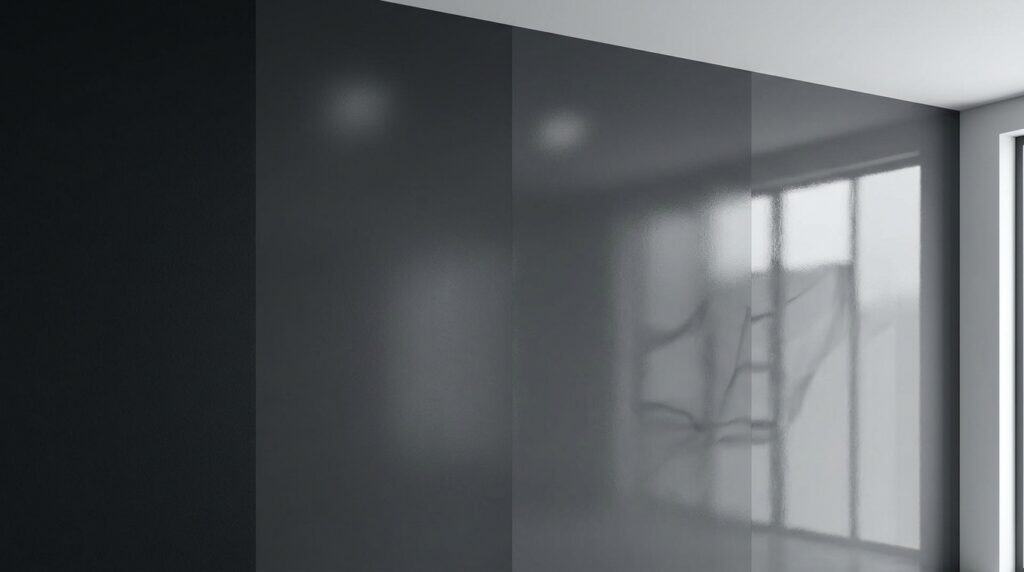
Visual aids help compare how different paint types behave on various surfaces and under typical household conditions. Factors such as flexibility, drying time, and resistance to environmental elements play a role in long-term satisfaction. Consider these characteristics when selecting between an oil paint latex alternative for your next project.
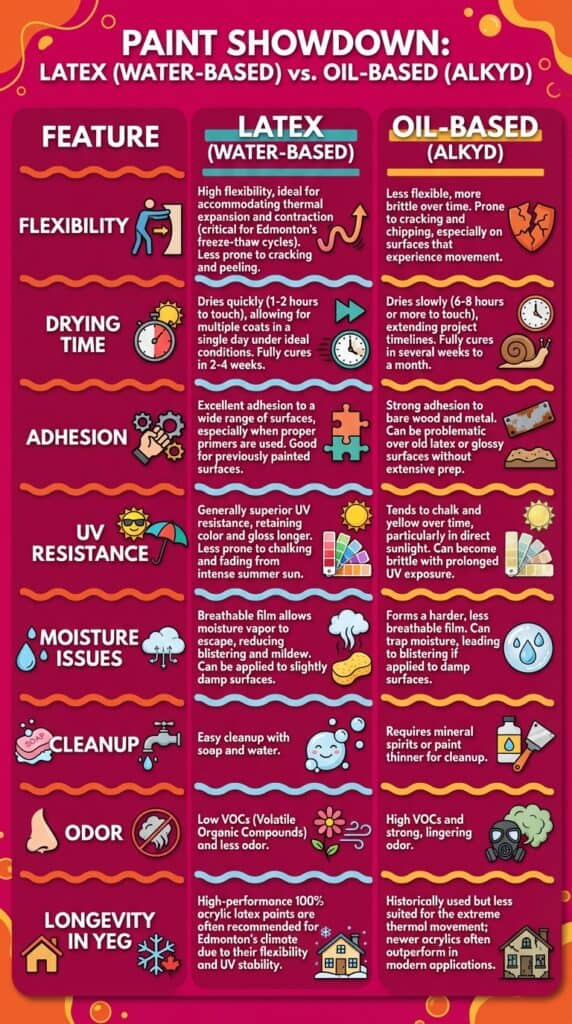
The image above offers a quick look at key differences between latex and oil-based paints. Phoenix Finishing Touch Painting helps clients evaluate these factors for their specific projects, ensuring a durable and attractive finish. For example, adhesion and UV resistance are particularly important for exterior surfaces, while drying time and odor affect interior work.
For more detailed information on specific characteristics, homeowners can review paint durability factors or consult our guide on latex vs oil paint application. Understanding these traits helps match the paint to the job, providing a better result.
FAQ
To help you make the best decision for your painting project, we’ve compiled answers to some common questions regarding oil paint latex and their respective applications.
| Question | Answer |
|---|---|
| When should I choose latex paint over oil-based paint for my Edmonton home? | Latex paint is a good choice for most interior walls and ceilings in Edmonton homes. It dries quickly, cleans up easily with water, and offers good color retention. Phoenix Finishing Touch Painting often recommends latex for general home improvements due to its ease of use and lower odor. It adheres well to drywall, plaster, and wood trim, simplifying future repainting. |
| What are the main benefits of using oil-based paints in certain situations? | Oil-based paints create a hard, smooth, and durable surface that resists chipping and scratching. They also offer superior adhesion to various surfaces, including previously painted oil finishes or stained wood. Phoenix Finishing Touch Painting suggests oil-based paints for trim, doors, and cabinetry where a flawless appearance and high resilience are desired. Their moisture resistance is also beneficial for areas like bathrooms or exterior doors. |
| How does the durability of latex paint compare to oil-based paint in Edmonton’s climate? | For high-traffic areas prone to impact, oil-based paints generally offer better resistance to chipping and abrasion due to their film hardness. Latex paints, especially modern acrylic formulations, provide more flexibility, which helps them resist cracking and peeling on surfaces that expand and contract with temperature changes. Phoenix Finishing Touch Painting considers the specific demands of the painted surface when making a recommendation. |
| What are the key differences in application and cleanup between latex and oil-based paints? | Latex paints are water-based, meaning they dry quickly and tools can be cleaned with soap and water. Oil-based paints dry more slowly and require mineral spirits or paint thinner for cleanup. Oil-based paints also have a stronger odor and necessitate good ventilation during application, unlike latex which has low odor. |